What it is
Fielva is a work sheet for field service. The dispatcher assigns the job, the technician does it on the phone and proves it with photos, a position, a timestamp, a QR scan and a meter reading. This works with no signal too, and the dispatcher sees the result straight away. Chat and tickets are optional modules.
Field systems share their mechanics; what differs from company to company are the rules. Fielva provides the shared part as a finished, tested foundation, so the engineering effort goes where a customer is genuinely different.
See the product on fielva.com →
Three engineering decisions behind it
A task type is data, not code. It says what starting and finishing require: how many photos, whether a location or a meter reading is needed, how close to the asset the technician must be. The phone builds its checklist from it, and the server checks exactly the same rules. What is ticked on the phone is accepted by the server.
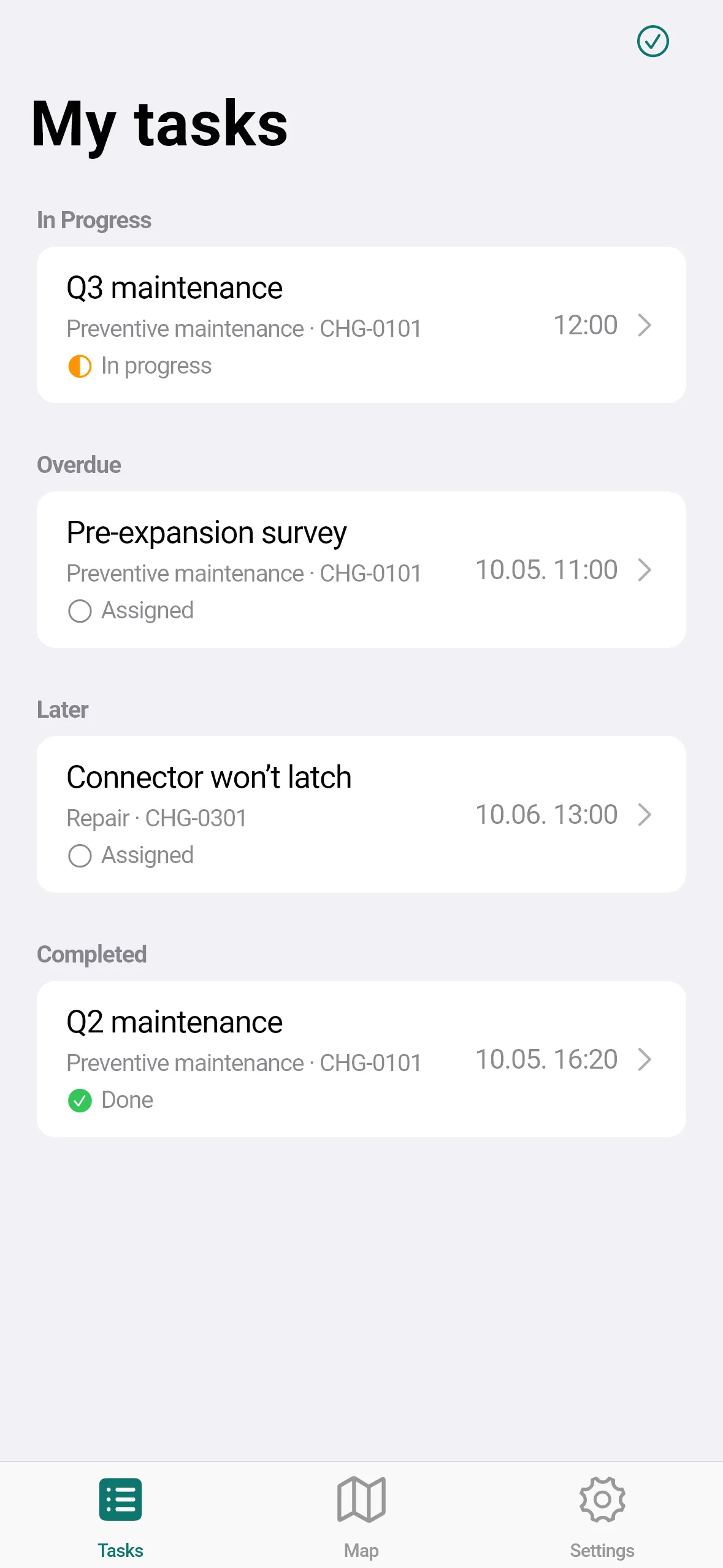
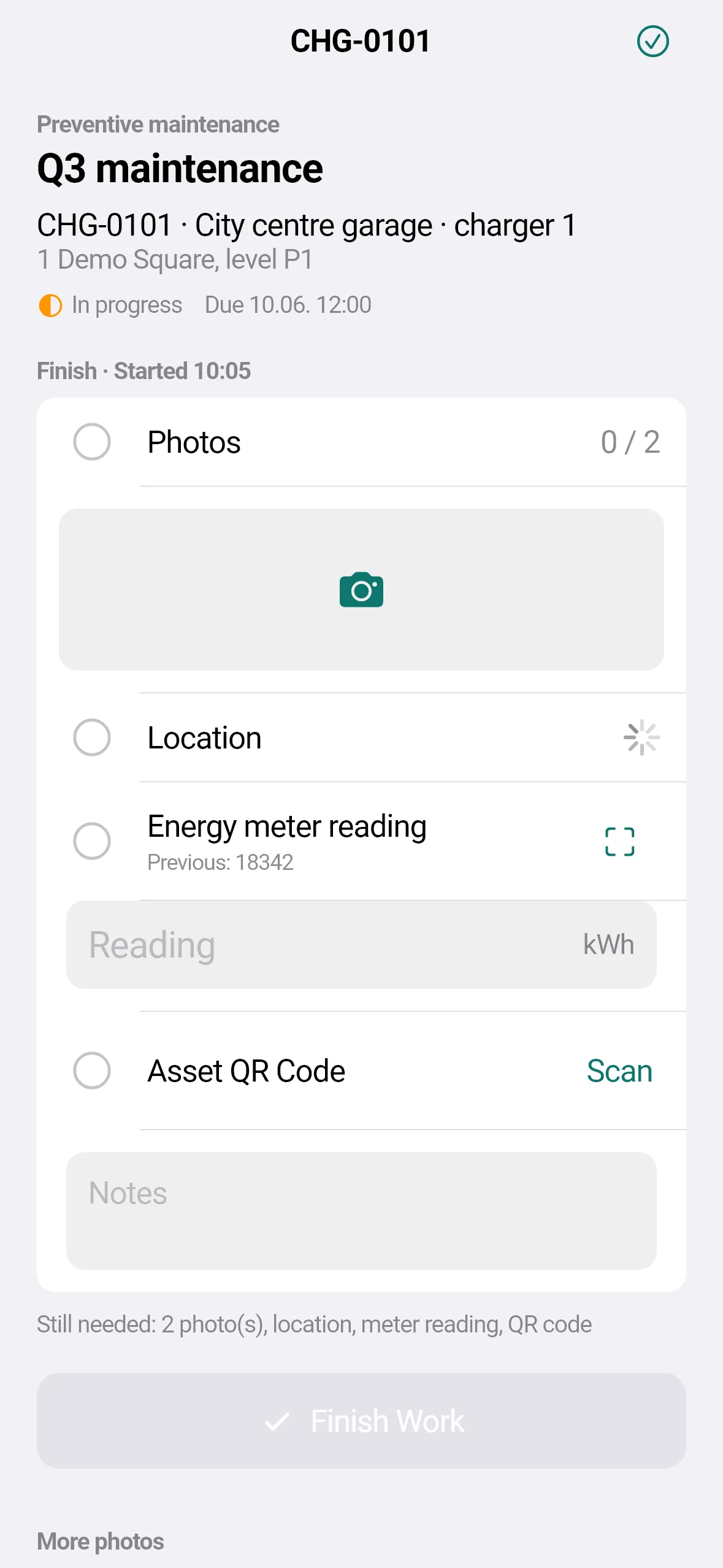
Offline, but never twice. Every action is saved on the phone first and sent in order. When a request arrives but its answer is lost (a lift, a tunnel, an underground car park), the phone sends it again. Every request with a side effect carries an Idempotency-Key, and the server answers a repeat with the stored response instead of doing the work twice.
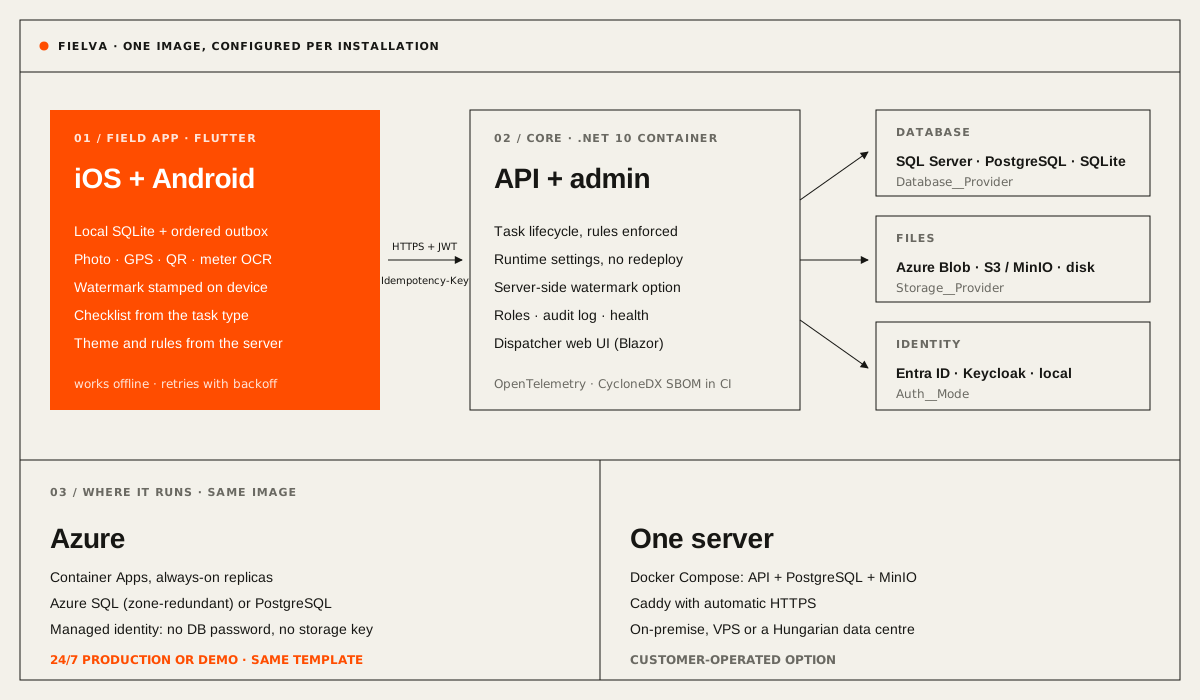
One image, any infrastructure. The same container runs on Azure (Container Apps, Azure SQL, managed identity with no passwords to rotate) or on the customer’s own server with Docker Compose. The database, the file store and the sign-in are each a single setting.
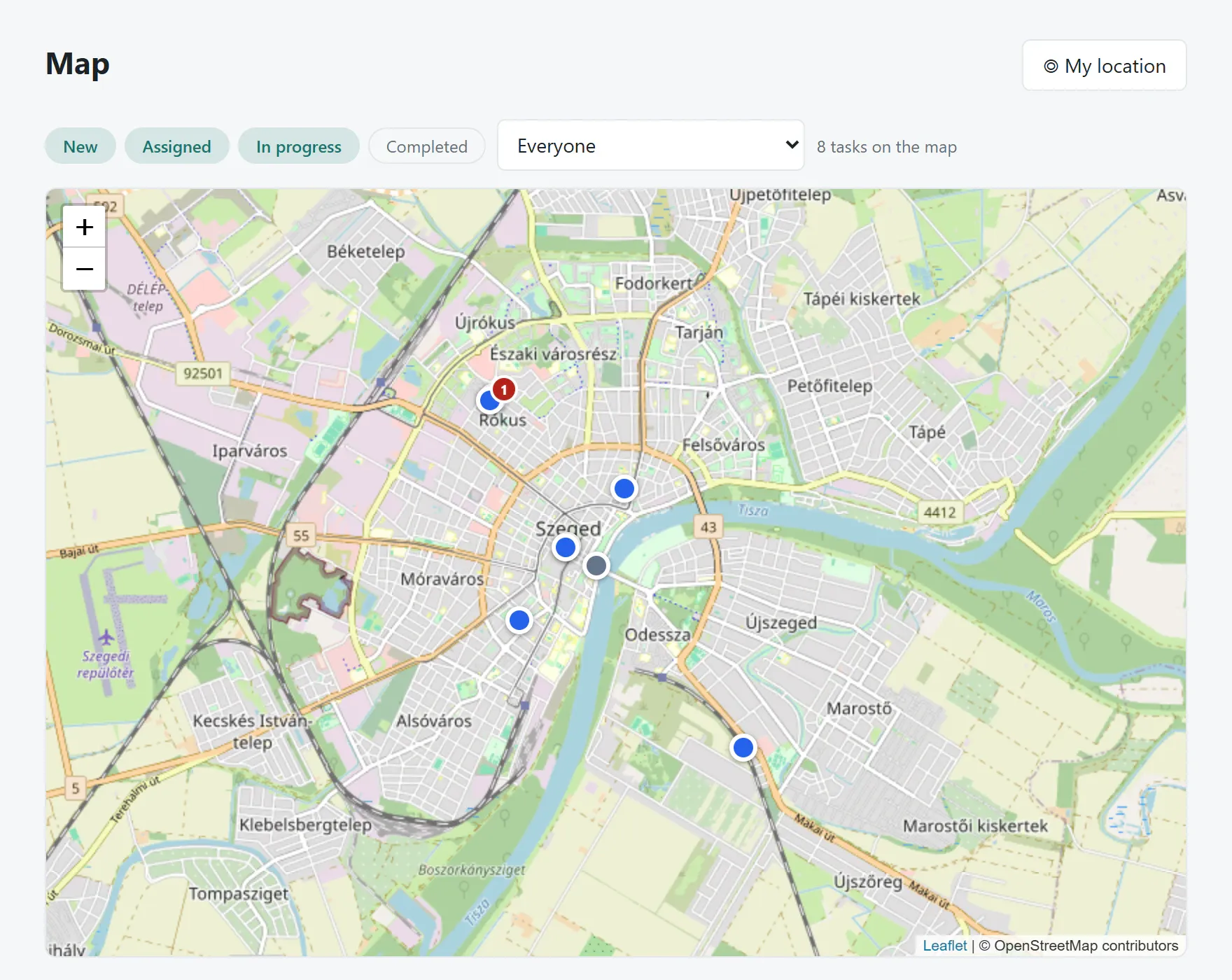
The dispatcher sees the tasks at their assets on the map, with the technicians’ last shared positions when the customer switches that on.
How we check it
End-to-end backend tests of the whole field flow on SQLite and on SQL Server; the phone’s upload queue against a simulated server; screenshot tests in light and dark appearance; a software bill of materials and a vulnerability scan for every image, which also feeds the technical documentation under the EU Cyber Resilience Act.
The demo shows a day at VoltCare Service, a fictional EV-charger maintenance company. Every name, code and coordinate is synthetic. Features, modules and deployment options are on fielva.com.